
Eating

Real Food comes from the farm, the fishery/sea or the forest. Real Food does not need a food label because you know what it is.

Processed food is generally high in sugar, refined processed carbohydrates, bad fats and are full of additives.

There is not a one size fits all diet for everyone because we all have different bodies in different states of metabolic health, different age groups have different needs, different genetics, different cultural backgrounds and different goals. However, the unifying thread across all groups is Real Food.

The Real Food approach includes:

  • Cutting out or significantly cutting down on sugar (even the so-called “natural sugars” such as honey or agave syrup). De-normalise sugar in your life
  • Cutting out artificial sweeteners
  • Cutting out or reducing consumption of beige carbohydrates (this includes pasta, rice, bread, biscuits, crackers, crisp breads, cereals)
  • Eating plenty of vegetables, (eat the rainbow) different coloured vegetables have different phytonutrients and antioxidants
  • Enjoying healthy fats in moderation – oily fish, avocado, olive oil, full fat dairy (if tolerated)
  • Enjoying fermented foods to optimise gut health
  • Avoiding any processed food with more than five ingredients
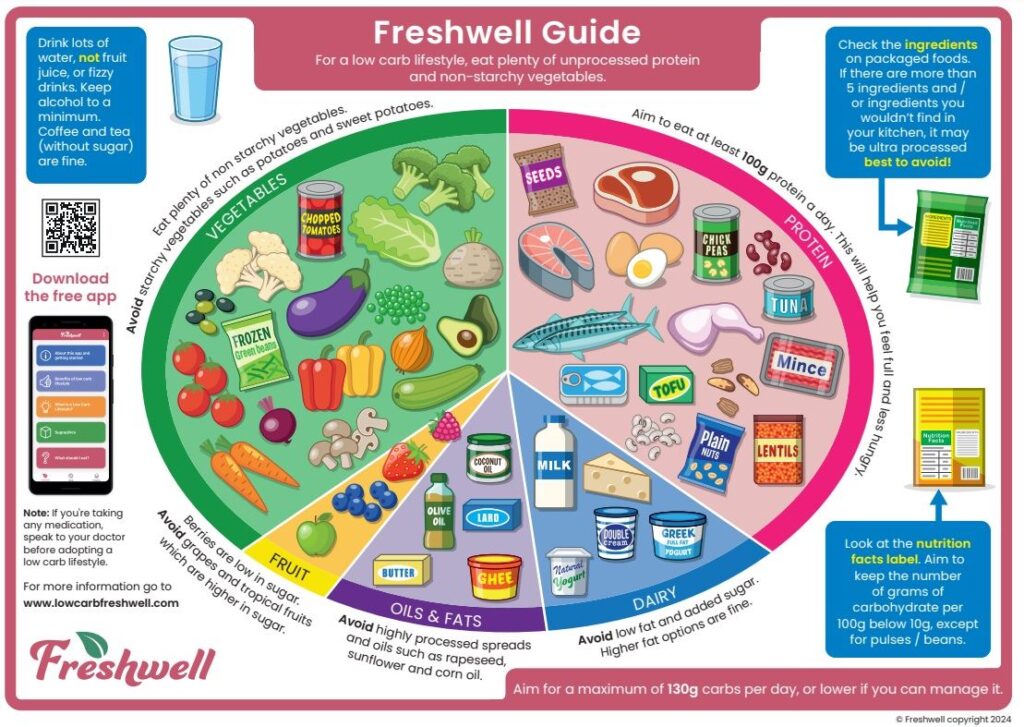
For a low carb lifestyle, eat plenty of unprocessed protein and non-starchy vegetables. Aim for a maximum of 130g carbs per day or lower if you can manage it.
Protect the liver, feed the gut

Professor Robert Lustig has distilled the Real Food approach into the above 6 words. The health of your liver and gut is central to metabolic health.

Protect the Liver

Minimise sugar (especially liquid sugar in the form of sweet drinks and fruit juices/smoothies) and alcohol. Reduce or cut out refined processed carbohydrates. All the above drives the making of new fat in the liver (de novo lipogenesis) which leads to Fatty Liver which in turn is the stepping stone to metabolic disease (including Prediabetes and Diabetes). When you eat plant foods especially vegetables you get functionally intact fibre which reduces the blood glucose spike from eating these foods which in turn also protects the liver.

Watch
Medical expert on healthy nutrition: ‘Protect the liver and feed the gut’

Feed the gut

Eat the rainbow of vegetables. Enjoy some fruit but eat your fruit whole and minimise fruit which spikes your blood glucose. Plant foods announce the different chemical compounds they carry (called polyphenols) in their colour – the more colour you eat, the wider array of these good polyphenols your body gets. The functionally intact fibre in your whole vegetables and fruit not only help reduce the blood glucose spikes but more importantly provide food for your good gut bacteria. Watch the video below which explains what the microbiome is.

If you are interested in reading more about real food vs processed food, we recommend reading Metabolical by Robert Lustig.

Video
How the food you eat affects your gut – Shilpa Ravella

Low carb, eat to control your blood glucose

Almost everyone regardless of age, metabolic health, level of activity should limit the amount of sugar (sucrose) and alcohol consumed. There is now irrefutable evidence that excess sugar is seriously damaging for health (in much the same way that alcohol is). The World Health Organization recommends that we should be consuming no more than 6 teaspoons of sugar per day. Public Health England has found that the average intake of sugar per day for adults is 15 teaspoons per day and for teenagers is 19 teaspoons per day. More than 50% of that sugar intake is generally hidden in processed foods that you are not aware of – everything from sauces to bread, tinned soup and yogurt.

When it comes to starch (rice, bread, cereal, pasta and potatoes) – we will all vary in our blood glucose response to these foods. The more insulin resistant you are, the less starch (and sugar) your body will be able to tolerate.

Watch
Sugar: The bitter truth

Real food traffic light system

The New Forest PCN low carb website gives you useful information on where to start with reducing carb intake. For Diabetics and Prediabetics, to further personalise the diet for you, if you have not already come to our group sessions and are interested in doing so, please see our Diabetes and Prediabetes Group Sessions page.

Eat the rainbow

Enjoy a beautiful array of vegetables (and some fruit) in your diet and forget the 5 a day – because actually, we probably should be eating more than 5 a day – why not 9 or 12 a day? The beautiful colours in vegetables and fruit mean they contain phytonutrients and antioxidants which actually do great things in the body. Vegetables and fruit are a great source of soluble and fermentable fibre which feeds your microbiota (your gut bacteria). Diversity is nature’s theme – diversity of the plant foods in our diet and diversity of our microbiota.

Watch
How to Feed Your Microbiome
Prebiotics | Food for your Microbiome
Tips for Trying New Foods | Q&A
8 Easy Tips to Help You Eat More Vegetables

Eating too much sugar at breakfast

Breakfast is probably one of the most difficult meals in the day because culturally we are used to eating refined processed carbohydrates and lots of processed breakfast foods are laden with sugar. Feeding ourselves and our children with typical breakfasts like cereal or toast ensures we are riding the sugar rollercoaster all day long. Our blood sugar levels soar than 2-3 hours later, our blood sugar plummets making us hungry and needing to eat more. Contrast this with a nutrient dense breakfast like eggs and avocado with fat and protein that keep our blood sugars stable and keep us full.

Watch
Sugar: Hiding in plain sight – Robert Lustig
Kids eating too much sugar at breakfast
Children who eat too much sugar are developing diseases only alcoholics used to get
How much sugar is there in your breakfast? | Jamie’s Sugar Rush

Understanding ultra-processed foods (UPFs)

Most of us think of food simply as what we eat each day. Real food usually comes from natural sources such as farms, gardens, the sea, or the countryside. These foods don’t have long ingredient lists, they are the ingredients and they provide the nutrients our bodies need to stay healthy.

What are ultra-processed foods?

Ultra‑processed foods (often called UPFs) are products that have been changed a lot from their original form. A simple way to think about it is:
If a food is wrapped in plastic and contains ingredients you wouldn’t normally use at home (such as emulsifiers, artificial sweeteners, colourings or preservatives),
then it is likely to be an ultra‑processed food.

UPFs are very common. For many people in the UK and the US, they make up around 60% of the diet.

Why are UPFs a concern?

UPFs are often marketed as healthy options — for example, “high‑protein”, “plant‑based”, “vegan‑friendly”, or “keto”. However, these labels don’t always mean the product is good for your health. Research suggests that eating a lot of ultra‑processed foods may be linked with:

  • weight gain
  • poorer metabolic health
  • a higher risk of some long‑term conditions
  • reduced diet quality overall

If you’d like to explore this topic further, Dr Chris van Tulleken’s book Ultra‑Processed People discusses the growing evidence around UPFs and their impact on health and the environment

How to spot UPFs

This short video explains five simple ways to identify ultra‑processed foods: 5 Ways To Identify Ultra-Processed Foods with Chris van Tulleken.

Learn more about how UPFs may affect health

Watch
How ultra-processed foods are making us sick

Page published: 29 July 2026
Last updated: 2 September 2026